

If you have received a removal order in Canada, do not panic. First of all, understand your situation and take a step, because in some
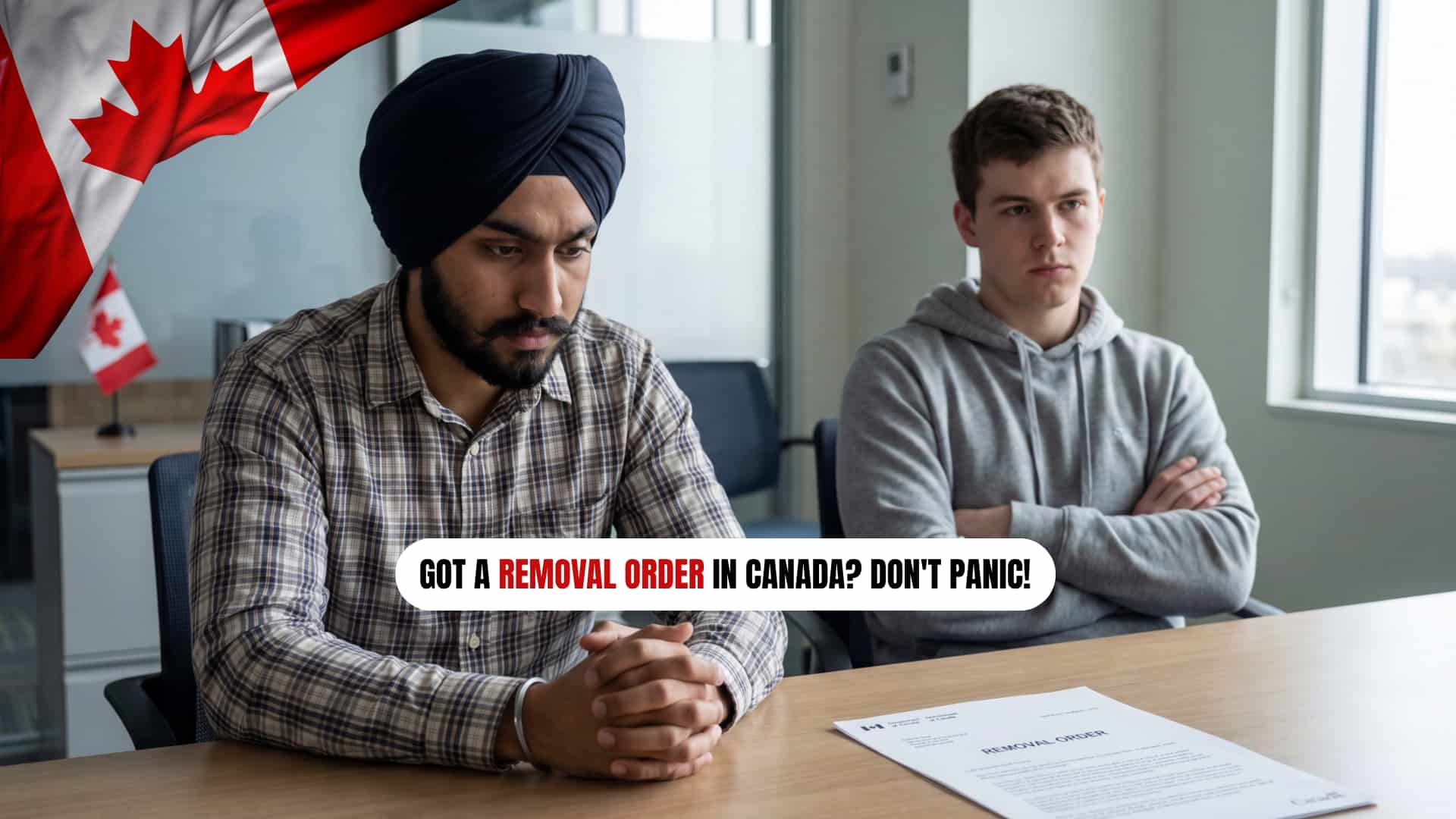
If you have received a removal order in Canada, do not panic. First of all, understand your situation and take a step, because in some cases, there may be legal options available to remain in the country. Canadian immigration law has different options to delay, stop, or sometimes cancel a removal order. The best approach to handle your case depends on your current situation and the type of removal order.
What is a Removal Order in Canada?
It is the official order given by the Canada Border Services Agency (CBSA) or the Immigration and Refugee Board (IRB) requiring the foreign national or permanent resident to leave Canada. It is issued if you are found inadmissible. Common reasons include:
- Staying in Canada more than your visa or permit
- Losing a refugee claim
- Misrepresentation
- Working or studying without permission
- Criminal convictions
Once your removal order is final and you have no more appeals, the CBSA will arrange your departure. They will give you a document which is known as Direction to Report. This document includes the exact date, time, and place of your departure. It is mandatory to follow this document.
The Three Types of Removal Orders
Canada has three main types of removal orders that require a person to leave the country. Each type has its own rules and consequences.
-
Departure Order
This is the least serious type of order. You must leave Canada within 30 days and confirm your departure with the CBSA at the border to get a Certificate of Departure. If you successfully complete both requirements, then you can return to Canada later without special permission.
If you don’t leave within 30 days or don’t get your Certificate of Departure, the order automatically becomes a deportation order, with no hearing and no notice.
-
Exclusion Order
An exclusion order means you cannot return to Canada for a certain amount of time. The usual ban is one year. If the order was due to misrepresentation (giving false information), the ban is five years. To come back before the ban ends, you must apply for and get an Authorization to Return to Canada (ARC).
-
Deportation Order
This is the most serious type of order. It comes with a lifetime ban from Canada. To ever return, you need an Authorization to Return to Canada (ARC), which is very hard to get. Deportation orders are given for the most serious reasons someone can be inadmissible, or when a person fails to follow a departure order.
The Main Ways to Stop a Removal Order in Canada
There is no single way to stop a removal order. The following are the main methods to prevent or postpone a removal order.
Step 1: Ask CBSA to Delay Your Removal (Deferral Request)
The fastest option is to send a written request to your CBSA removals officer and ask for extra time before you have to leave Canada.
CBSA can only approve a deferral in limited situations, such as:
- You are too sick to travel.
- Your flight has been cancelled.
- Your child needs to finish the school year.
- You are receiving important medical treatment.
- You have a pending immigration process that could affect your removal and involves serious risks to your safety.
The Humanitarian and Compassionate (H&C) application is not enough to stop a removal order. You must provide strong evidence to support your request.
Step 2: Request a Stay of Removal from the Federal Court
If CBSA refuses your deferral request, you may ask the Federal Court of Canada to stop your removal temporarily.
This usually involves:
- Challenging the immigration decision through Judicial Review.
- Filing an emergency Stay Motion to stop your removal while the Court reviews your case.
There are 3 main factors that a court usually looks for:
- Serious issue: Your case has a valid legal reason that needs to be reviewed.
- Irreparable harm: You could face serious harm if you are removed from Canada.
- Balance of convenience: The harm you would face is greater than the government’s reason for removing you.
A stay of removal is often requested shortly before the removal date. If approved, you can stay in Canada while your case is reviewed.
Step 3: Apply for a Pre-Removal Risk Assessment (PRRA)
A PRRA is Canada’s final protection process for people who may face danger if returned to their home country.
A PRRA considers whether you could face:
- Persecution
- Torture
- Risk to your life
- Cruel or unusual treatment or punishment
Important things to know:
- You cannot apply on your own. CBSA must first tell you that you are eligible.
- Deadlines are very short.
- Some people may not be eligible to apply.
- Certain PRRA applications automatically stop a removal until a decision is made.
If approved, you may be allowed to stay in Canada as a protected person.
Step 4: Submit a Humanitarian and Compassionate (H&C) Application
An H&C application asks IRCC to grant permanent residence based on compassionate reasons.
Officers may consider:
- Your establishment in Canada
- Family relationships in Canada
- The best interests of affected children
- Hardship you would face if removed
However, filing an H&C application does not automatically stop a removal order. Unless you receive a separate deferral or stay of removal, you may still have to leave Canada while your application is being processed.
Step 5: Appeal to the Immigration Appeal Division (IAD)
Some people can appeal their removal order to the Immigration Appeal Division.
This option is generally available to:
- Permanent residents
- Protected persons and Convention refugees
Most visitors, students, and workers cannot appeal to the IAD.
Key points:
- The appeal must usually be filed within 30 days of receiving the removal order.
- A valid appeal can temporarily stop the removal process.
- The IAD may cancel the removal order, dismiss the appeal, or allow you to stay under certain conditions.
People found inadmissible for serious criminality, security concerns, organized crime, or human rights violations may not have a right to appeal.
Major 2026 Immigration Changes
Bill C-12, the Strengthening Canada’s Immigration System and Borders Act, became law on March 26, 2026. It introduced two new asylum eligibility rules for claims made on or after June 3, 2025:
- One-Year Rule: If you wait more than one year after entering Canada to make a refugee claim, your case may not be heard by the IRB. This rule applies to people who first entered Canada after June 24, 2020.
- 14-Day Rule: Individuals who entered Canada between official Canada–U.S. border crossings and waited more than 14 days to make a claim will also not be referred to the IRB.
In these cases, the PRRA (Pre-Removal Risk Assessment) becomes the primary protection process. If these rules may apply to you, seek legal advice and document your entry history as early as possible.
Conclusion
In Canada, a removal order is a serious thing, but it doesn’t always mean that you must leave Canada right away. Depending on your situation, you may be able to request a deferral from CBSA, apply for a stay of removal, submit a PRRA or H&C application, or file an appeal if you are eligible. The most important thing is to act quickly, as some deadlines are only a few days long. To be on the safe side, it is always recommended to hire a professional immigration consultant, because a professional has the right experience and accuracy to solve the issue. So don’t delay even a second. Contact CWC immediately and book a free consultation.