

A Pre-Removal Risk Assessment (PRRA) is an important safety check in the Canadian immigration system. It helps to ensure that people who are about to
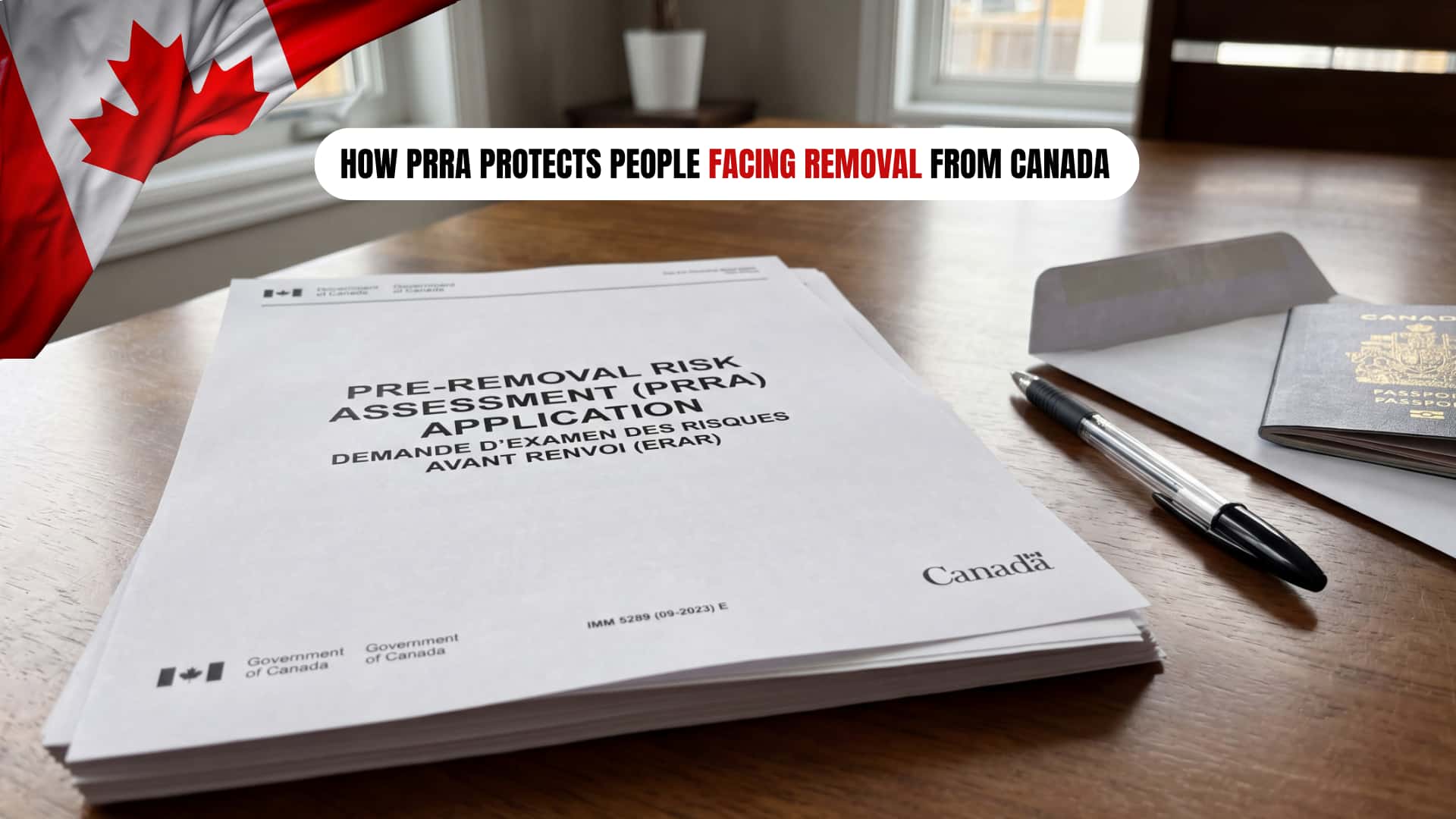
A Pre-Removal Risk Assessment (PRRA) is an important safety check in the Canadian immigration system. It helps to ensure that people who are about to be removed from Canada are not sent back to a country where they could face serious harm, persecution, or danger. The role of IRCC is to review PRRA applications, while the CBSA is responsible for removal procedures as well as notices. The PRRA gives people a final chance to ask for protection by submitting their case and evidence in writing.
Facing Removal from Canada?
If you have received a removal order (often after a rejected refugee claim, ineligible asylum application, or loss of status), you may be eligible for a Pre-Removal Risk Assessment (PRRA).
CBSA officers typically conduct a pre-removal interview and determine eligibility for a PRRA. You cannot apply for a PRRA on your own. You must first receive a PRRA notification from CBSA, which will explain whether you are eligible and provide the application instructions and deadlines.
Key scenarios where PRRA may arise include:
- After a negative decision from the Immigration and Refugee Board (IRB).
- When a refugee claim is deemed ineligible (e.g., under recent reforms like Bill C-12, which introduced stricter timelines such as the one-year claim deadline for certain applicants).
- For other individuals facing removal who have not previously claimed protection or meet specific criteria.
Important note on ineligibility: You generally cannot apply if your claim was ineligible under the Safe Third Country Agreement, if you are a Convention refugee in another country you can return to, if you already have protected person status in Canada, or if you are subject to extradition. Serious criminality, security inadmissibility, or other exclusions may also limit options or restrict the assessment grounds.
If your refugee claim or previous PRRA was refused, withdrawn, or abandoned, then, as a general rule, you have to wait 12 months before you can make a new PRRA application.
But if the situation in your home country has changed in a major way, then some people might get an exemption from the 12-month waiting. Always check the latest IRCC rules to see if an exception applies.
How PRRA Can Protect You from a Removal Order?
If your PRRA is approved, it can stop your removal from Canada right away. You’ll be recognized as a “protected person,” which gives you the chance to apply for permanent residence here. Basically, it is how Canada meets its international obligations under the Immigration and Refugee Protection Act (IRPA). The main goal is to make sure that we don’t send people back to countries where they could face serious harm.
The PRRA Application Process
1. Receive Notification: CBSA provides the application kit and deadlines.
2. Submit the Form: Complete Form IMM 5508 (Application for a Pre-Removal Risk Assessment). In most cases, each family member aged 18 or older in Canada must submit their own application. Deadlines are short, so you must take action within time. In most cases, you must submit the form within 15 days and provide all supporting evidence within 30 days.
3. Written Submissions and Evidence: Clearly explain the risks you would face in your home country, why you cannot safely move to another area within that country, and any important changes since your last decision. For repeat applications, only new information or evidence is usually considered.
- Supporting documents: Country condition reports, news articles, police/medical records, witness statements, personal letters, etc.
- All non-English/French documents require certified translations.
4. Submission: Submit your application and supporting documents to the IRCC office. In most first-time PRRA cases, your removal is automatically put on hold while a decision is being made.
There is no fee to apply for a PRRA. Most decisions are made based on your written application and supporting evidence, so it is important to provide strong and complete documentation.
Tips for a Strong PRRA Application
- Explain clearly even minor details and add all the risks you may face if you return to your home country.
- Include recent as well as reliable evidence to support your case.
- Consider consulting a regulated immigration lawyer or authorized representative (use IRCC’s list to verify).
- Meet all deadlines strictly to maintain any stay of removal.
- Update IRCC on any changes in circumstances.
Conclusion
A Pre-Removal Risk Assessment (PRRA) is one of the most important protections for people in removal situations in Canada. It is considered a last resort to help these people avoid a return to a place where they may be persecuted, tortured, or seriously harmed.
Once you get a notice from the CBSA, it is time to act quickly. Only a strong and well-supported PRRA application can save you from removal. So never delay your case, act fast and contact a professional immigration consultant for reliable and accurate guidance.